
.jpg)
Carbon trading is a market-based mechanism used to reduce greenhouse gas (GHG) emissions by assigning a financial value to carbon dioxide (CO₂) and other greenhouse gases. It enables organizations to manage emissions in a cost-effective and measurable manner.
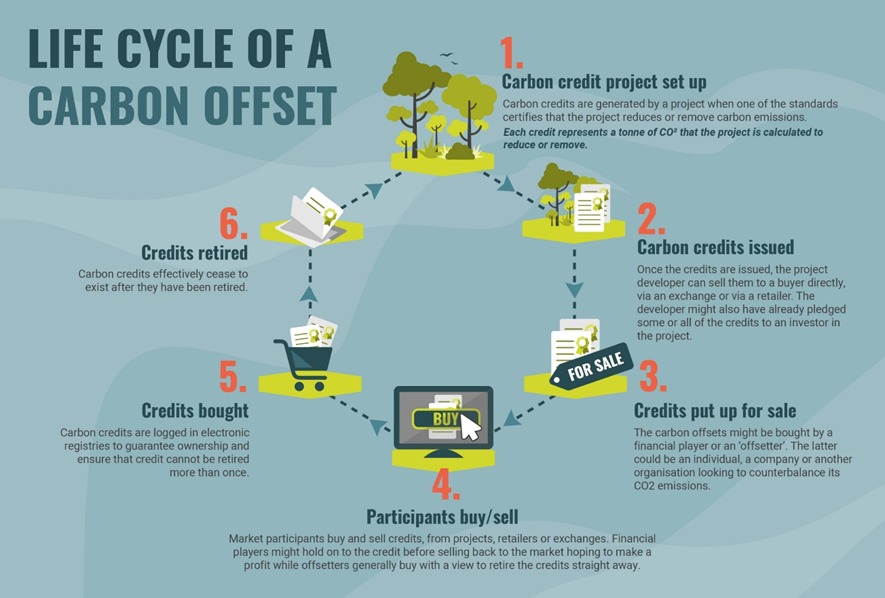
At the core of carbon trading are carbon credits. One carbon credit represents the reduction or removal of one metric ton of CO₂ equivalent. Companies that emit less than their permitted limit can sell excess credits, while companies that exceed their limit must buy credits or reduce emissions.
Carbon markets operate in two main forms:
1. Compliance Carbon Markets
These are regulated by governments or international bodies. Companies are legally required to meet emission limits under systems such as cap-and-trade. Failure to comply results in penalties.
2. Voluntary Carbon Markets
These markets allow companies and individuals to voluntarily offset emissions by purchasing credits from certified projects such as renewable energy, afforestation, energy efficiency, and waste-to-energy initiatives.
Carbon trading supports:
By putting a price on carbon, carbon trading encourages industries to innovate, reduce emissions, and transition towards a low-carbon economy.


© Enecovery 2026. Proprietary technology and content. All rights reserved.